

Salt-Resistant Outdoor Blinds for Coastal Bayside Homes: The 2026 Durability Guide

Why do most outdoor blinds in Bayside look ten years old after just one summer of salt spray? If you've noticed your metal tracks corroding or your mechanisms jamming when the wind picks up, you aren't alone. Living near the water is a dream, but the harsh coastal air is often a nightmare for standard hardware. We agree that a premium Bayside home deserves an outdoor space that stays functional without constant maintenance. It's frustrating to invest in your lifestyle only to watch salt and UV rays degrade your comfort.
This 2026 guide helps you find the best salt-resistant outdoor blinds for coastal Bayside homes. You'll learn how to protect your alfresco area with marine-grade zip blinds designed to thrive in high-corrosion environments. We preview the specific hardware, fabric technology, and local manufacturing standards required to keep your outdoor room usable year-round. Discover how to secure hardware that looks brand new after five years and find a long-term warranty that actually covers coastal conditions.
Key Takeaways
- Identify why Port Phillip Bay winds accelerate corrosion and how marine-grade 6063 T5 alloys provide the ultimate defense for your home.
- Learn how to select salt-resistant outdoor blinds for coastal Bayside homes that use UV-stabilised mesh to prevent sun-induced brittleness.
- Compare zip-style tensioning against standard rollers to see how a complete seal stops salt spray from entering your alfresco area.
- Implement a "fresh water flush" and silicone-based lubrication routine to ensure your blind mechanisms never jam or seize.
- Gain the advantage of 100% Australian-made hardware that eliminates middleman costs while offering superior coastal durability.
Why Bayside Coastal Air is Brutal on Standard Outdoor Blinds
Living in the Bayside area offers stunning views, but the environment is relentless. Standard outdoor blinds aren't built for the high-sodium atmosphere of Port Phillip Bay. Sodium chloride is a powerful oxidiser. It accelerates the breakdown of standard metals and finishes at an alarming rate. If your blinds aren't specifically engineered as salt-resistant outdoor blinds for coastal Bayside homes, you'll likely see damage within the first season.
The problem starts with the wind. Bayside winds carry fine salt spray far beyond the immediate shoreline. This aerosolized salt settles into every crevice of your blind system. When salt mixes with morning dew or humidity, it creates a sticky, abrasive "grinding paste". This mixture gets trapped in standard rolling mechanisms. Every time you operate the blind, this paste wears down the internal components. Eventually, the system jams, pits, or develops a white, chalky residue that signals total material failure. You might notice the tracks becoming harder to slide or the motor straining against the friction. These are the first signs that the coastal air is winning the battle.
The Chemistry of Salt-Air Damage
Salt is hygroscopic, which means it pulls moisture directly from the air even when it's not raining. This keeps your blind hardware in a constant state of dampness. Standard powder coating often hides the problem until it's too late. Salt gets underneath the coating through tiny imperfections, causing the metal to bubble and flake. This is why manufacturers use a standardized corrosion test method to determine how long materials can survive these conditions. Without marine-grade protection, the fabric also loses its elasticity. It becomes brittle and "crisp" under the combined assault of salt and intense coastal UV rays.
Bayside Microclimates: Brighton to Beaumaris
Corrosion isn't uniform across the region. Homes in Beaumaris, perched on cliffs, face different wind loads and direct spray than those in the sheltered pockets of Brighton. However, the salt concentration remains high across the entire Bayside corridor. Standard blinds are typically rated for inland Melbourne where the air is dry and salt-free. In Bayside, you need hardware that exceeds these basic ratings. If your current tracks rattle in the wind or the fabric feels stiff, your blinds weren't built for a microclimate that demands salt-resistant outdoor blinds for coastal Bayside homes. You can contact us to see how marine-grade systems differ from the retail standards that fail in our local climate.
The Anatomy of a Genuinely Salt-Resistant Outdoor Blind
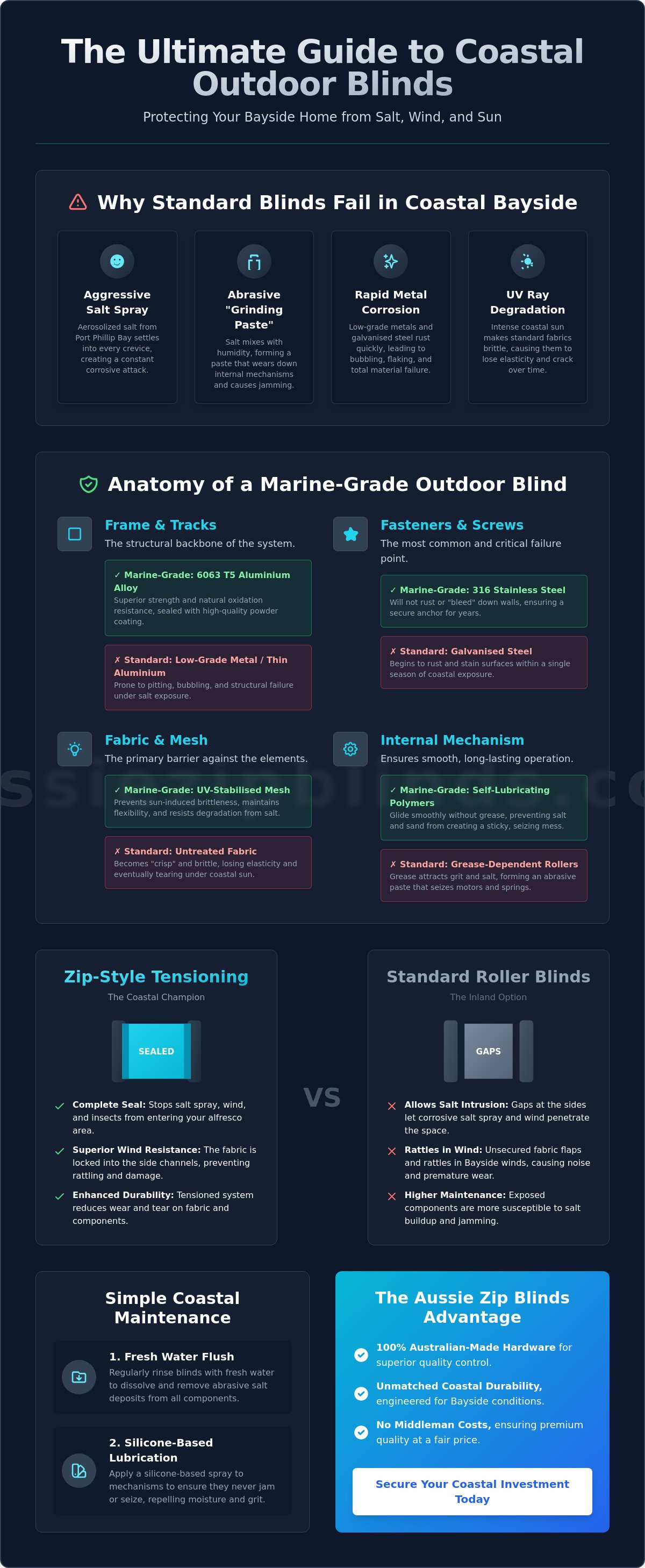
Choosing salt-resistant outdoor blinds for coastal Bayside homes requires looking past the fabric. While the mesh is visible, the internal hardware determines if your investment lasts five years or five months. Standard retail blinds often use low-grade metals that fail quickly in the Port Phillip Bay atmosphere. You need a system engineered with marine-grade materials from the tracks to the smallest screw.
The foundation of a durable coastal blind is the aluminium alloy used in the headbox and side channels. We use 6063 T5 marine-grade aluminium. This specific alloy is the industry standard for coastal environments because it offers superior structural strength and natural resistance to oxidation. When combined with a high-quality powder coating, it creates an impenetrable barrier against salt. This coating isn't just for aesthetics. It seals the metal, preventing salt particles from finding a foothold and starting the corrosion process. If you want to see these materials in person, you can book a local consultation to view our marine-grade samples.
Fasteners are the most common failure point in Bayside. Many installers use galvanised steel screws because they're cheaper. In a coastal setting, galvanised steel will rust and "bleed" down your walls within a single season. Genuinely salt-resistant systems use 304 or 316-grade stainless steel fasteners. These components won't rust, ensuring your blinds remain securely anchored even during heavy coastal storms.
Hardware That Won't Seize
Internal mechanisms are vulnerable to salt buildup. Precision engineering is required to ensure the headbox remains clear of debris. Our zip systems feature non-corrosive side channels that allow the blind to glide smoothly without the need for heavy grease. Grease often attracts salt and sand, creating a sticky mess that eventually seizes the motor or spring. By using self-lubricating polymer inserts and protected internal spring balances, we keep the mechanism moving freely for years.
Coastal-Grade Fabrics and Mesh
The sun is just as damaging as the salt in Bayside. UV-stabilised mesh is essential to prevent the fabric from becoming brittle and tearing under wind pressure. PVC-coated polyester is generally superior to fibreglass mesh in coastal areas. It's easier to clean and resists the "salt-bleaching" effect that turns dark fabrics grey over time. Breathability is also a major factor. Proper airflow prevents moisture from being trapped against your windows, which stops mould and mildew from growing in the humid Bayside air. Stick to high-performance meshes that maintain their colour fastness and structural integrity despite constant exposure to the elements.
Zip-Style vs. Standard Roller Blinds for Bayside Winds
Standard roller blinds often fail in coastal environments because they behave like sails. When a 50km/h gust hits Port Phillip Bay, a standard blind will billow, rattle, and eventually pull out of its mountings. This "sailing effect" puts immense pressure on the brackets and the fabric. It's the primary reason why homeowners in Brighton and Sandringham find themselves replacing cheap rollers every two years. If you want a setup that lasts, you need a system that manages wind load effectively.
Zip-style blinds offer a massive tension advantage. By locking the fabric into side channels, the blind remains taut regardless of the wind speed. This structural stability is a hallmark of salt-resistant outdoor blinds for coastal Bayside homes. Instead of the blind flapping against your house, the load is distributed evenly across the entire track system. This prevents the fabric from stretching or tearing over time. It also ensures that the blind stays exactly where you want it, even during a stormy Bayside evening.
Choosing between motorised and manual systems is another critical decision. In salt-heavy environments, motorised systems are often more reliable. Modern motors are sealed units, protecting the internal electronics from the corrosive air. Manual crank handles and exposed chains are prone to "salt-crusting" and seizing. A motorised system eliminates these high-friction points, providing a smoother operation that requires less physical maintenance. It also allows you to retract the blinds instantly if a sudden coastal squall arrives.
Why the Zip Mechanism Wins
The secret lies in how the fabric is secured. In a zip system, the edges of the fabric are welded to a heavy-duty zip that sits inside a hidden track. This design creates a complete seal. It stops the annoying "clanking" noise of metal hitting metal on windy nights. A fully enclosed headbox adds an extra layer of protection. It keeps the fabric roll shielded from salt spray and dust when the blind is retracted. This ensures the material doesn't sit in a "salt bath" while it's not in use.
Creating a True Outdoor Room
A sealed zip system does more than just stop the wind. It creates a weather-proof barrier that keeps salt spray out of your alfresco area entirely. This is vital for protecting your outdoor furniture, stainless steel BBQs, and stone benchtops from pitting and corrosion. You aren't just buying a blind; you're securing a usable room. For more tips on maximizing your space, check out our Alfresco Blinds Melbourne Guide. It covers everything you need for year-round outdoor living in our unique climate.
5 Steps to Maintain Your Coastal Blinds in Bayside
Even the highest quality salt-resistant outdoor blinds for coastal Bayside homes require a basic care routine. The Port Phillip Bay environment is aggressive. Salt crystals are sharp and abrasive. If you leave them to accumulate, they act like sandpaper on your tracks and fabric. Follow these five steps to ensure your hardware looks and functions like new for years.
- The Fresh Water Flush: This is your most effective defence. Once a week, give your blinds a thorough rinse with a garden hose. Focus on the headbox and the side tracks where salt tends to hide.
- Side Channel Inspection: Look for white, crusty deposits inside the tracks. These are salt crystals. If you see them, rinse them away immediately before they cause the zip mechanism to drag.
- Correct Lubrication: Only use dry silicone-based spray. Never use oil-based lubricants or grease. These products attract sand and salt, creating a sticky sludge that will eventually seize your motor.
- Gentle Mesh Cleaning: Use a soft brush and mild soapy water for the fabric. Avoid harsh chemicals that might strip the UV-stabilised coating that protects the mesh from the Bayside sun.
- Professional Tune-Ups: Schedule a service every 12 to 24 months. A professional can check the internal tension and ensure the motor is operating within its correct parameters.
The Weekly Maintenance Routine
Consistency is more important than intensity. Use a standard garden hose on a low-pressure setting. Never use a high-pressure washer on your outdoor blinds. High pressure can force salt particles deeper into the motor housing and damage the delicate zip seals. The best time of day to clean is early morning or late afternoon. This prevents the sun from drying the water too quickly, which often leaves unsightly water spots on the mesh. A quick five-minute rinse once a week can double the lifespan of your hardware.
Long-Term Care for Zip Mechanisms
Smooth operation depends on low friction. Apply a light coat of dry silicone spray to the side channels every few months. This ensures the zip glides effortlessly and reduces the load on your motor or spring balance. Watch for early signs of friction, such as the blind moving slower than usual or making a faint squeaking sound. Regular maintenance isn't just about performance; it's often a requirement for maintaining your warranty in high-corrosion zones. If you've noticed your current blinds are sticking or making noise, book a professional inspection today to prevent permanent damage to your system.
The Aussie Zip Blinds Advantage for Coastal Homes
Many retailers in Melbourne act as simple middlemen. They sell generic products designed for broad markets. We take a different approach. We are the manufacturers. This means every set of salt-resistant outdoor blinds for coastal Bayside homes we install is engineered specifically for our local conditions. We control the entire process. From the first cut of the marine-grade aluminium to the final zip weld, we ensure your blinds meet the highest standards of coastal durability.
Being 100% Australian-made isn't just about local pride. It's about performance. We understand that a blind in Beaumaris faces different environmental pressures than one in an inland suburb. Our direct-to-consumer model ensures you aren't paying for a salesperson's commission or high showroom overheads. Instead, your investment goes directly into the higher-grade materials we've discussed, such as 6063 T5 alloys and 316-grade stainless steel. You get marine-grade quality without the middleman markup.
Coastal homes in Bayside often feature unique modern architecture with large spans and specific mounting requirements. We custom-build every unit to fit your exact dimensions perfectly. This precision is vital for creating the "complete seal" that keeps salt spray out of your living space. We back our work with a 10-year warranty. This is real protection for Bayside homeowners that accounts for the reality of living near the water. We stand behind our hardware because we know exactly how it's made.
Why Local Manufacturing Matters
Local production ensures faster turnaround times and direct support. You won't have to wait months for replacement parts to arrive from overseas. If you need assistance in the Bayside or Mornington Peninsula area, our team is right here. We maintain total quality control over every component. We know exactly what metal and fabric goes into your blinds because we handle them ourselves. Discover more about our Aussie Advantage Pillar and how it secures your home.
Pricing and Value in 2026
Value in 2026 is measured by longevity. Cheap imports might save you money today, but they'll likely seize or fade within two seasons. Our direct model allows us to offer marine-grade specs at prices comparable to standard retail options. It's a significantly higher return on investment for your property. For a detailed breakdown of what to expect, read our Cost of Outdoor Blinds Guide. It helps you compare value across the Melbourne market and make an informed choice for your coastal home.
Secure Your Bayside Lifestyle with Marine-Grade Protection
You now understand why standard hardware fails in the face of Port Phillip Bay's relentless salt spray. Coastal durability isn't just a feature; it's a requirement for any long-term outdoor investment. By choosing salt-resistant outdoor blinds for coastal Bayside homes, you ensure your alfresco area remains functional and beautiful despite the corrosive environment. Marine-grade 6063 T5 aluminium and stainless steel fasteners are the only materials that truly stand the test of time in our local microclimate.
We provide 100% Australian Made systems engineered specifically for our unique coastal conditions. Our direct-to-consumer value model eliminates middleman markups, putting higher-grade materials into your home for a more competitive price. We stand behind every installation with a 10-Year Warranty, ensuring your outdoor room remains a sanctuary for years to come. It's time to stop fighting the elements and start enjoying your outdoor lifestyle year-round without the stress of hardware failure.
Book Your Free Coastal Measure & Quote in Bayside and transform your outdoor space today.
Frequently Asked Questions
Are all outdoor blinds salt-resistant?
No, most standard retail blinds are designed for inland use and lack the necessary protection for the bay. Genuinely salt-resistant outdoor blinds for coastal Bayside homes must feature marine-grade alloys and treated fabrics to survive the Port Phillip Bay air. Without these specific materials, hardware will typically pit, chalk, or seize within the first twelve months of exposure.
How often should I clean my outdoor blinds if I live in Bayside?
You should give your blinds a quick fresh water rinse once a week. This simple habit prevents salt crystals from forming a "grinding paste" in the side channels and headbox. A five-minute flush with a standard garden hose is your best defence against mechanical failure. Don't wait for visible crusting before you act, as salt is hygroscopic and attracts moisture even on dry days.
Will salt air void my warranty on outdoor blinds?
Many standard warranties exclude damage caused by "environmental factors" or salt spray. Our 10-year warranty is different because it's designed for our local climate. It specifically covers coastal installations because we use components engineered for these high-corrosion zones. Always check the fine print to ensure your investment is protected against the specific Bayside atmosphere.
What is the best material for outdoor blind tracks near the ocean?
6063 T5 marine-grade aluminium is the industry standard for coastal tracks. It offers the best balance of structural strength and natural corrosion resistance. When you pair this with 316-grade stainless steel fasteners, you create a system that won't rust or bleed down your walls over time. Avoid galvanised steel or low-grade aluminium alloys that fail quickly near the water.
Can motorized blinds handle the salt air in coastal areas?
Yes, motorized blinds are often more durable in coastal zones than manual ones. The motors are sealed units that protect sensitive electronics from the salty air. Manual systems rely on exposed chains, pulleys, or cranks that quickly become salt-crusted and difficult to operate. A motorized system removes these high-friction points, providing a smoother operation that requires less physical maintenance.
Do salt-resistant blinds cost more than standard outdoor blinds?
Salt-resistant systems have a higher initial price than basic retail imports. However, the long-term return on investment is significantly higher. You won't be paying for a full replacement every two years due to seized tracks or brittle fabric. Our direct-to-consumer model ensures you get these premium marine-grade specs without the typical retail markup found at large hardware chains.
How do I know if my blinds are truly marine-grade?
Ask for the technical data sheet of the hardware and the grade of the aluminium alloy. Truly marine-grade salt-resistant outdoor blinds for coastal Bayside homes will specify the use of 6063 T5 aluminium and stainless steel components. If an installer can't confirm the specific alloy grade or uses galvanised fasteners, it's likely a standard product that won't survive a Bayside summer.
What is the "zip" in zip blinds and why does it help with wind?
The "zip" refers to a hidden side-locking mechanism that secures the fabric edges into the tracks. This creates a high-tension surface that eliminates the "sailing effect" common with standard rollers. It's essential for coastal homes because it prevents the fabric from flapping, rattling, or tearing when hit by 50km/h gusts coming off the bay. This design also creates a complete seal against salt spray and wind.
Disclaimer
All articles are generated and written from various sources and try to reflect all information from experience and knowledge, as well as information collected from the internet.