

Outdoor Blinds Durability: A Guide for Melbourne’s South East & Bayside Homes
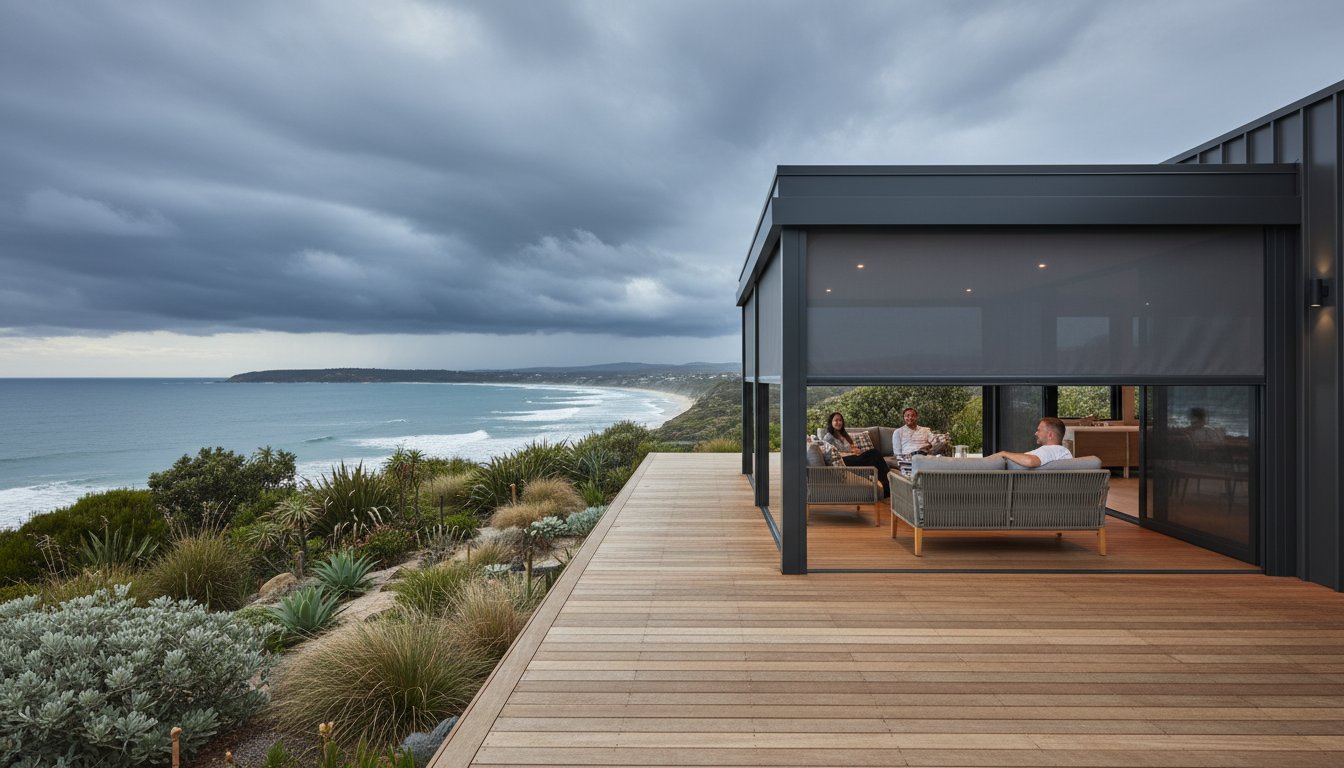
Last Tuesday, a storm front hitting the Mornington Peninsula with 95km/h gusts left dozens of homeowners staring at shredded fabric and buckled tracks from cheap, imported systems. It's a frustrating reality for many Bayside residents who find that salt air and intense UV levels can degrade standard materials in less than 24 months. You want an outdoor room that stays functional and beautiful without the constant fear of weather damage. We agree that your home deserves better than a temporary fix that fails when the first cold front rolls in from the bay.
This guide dives deep into outdoor blinds durability, explaining why local manufacturing and marine-grade components are the only way to achieve a true "set and forget" lifestyle. We'll show you exactly what makes a blind survive a coastal storm, from the science of UV-stabilized fabrics to the engineering of high-wind resistance. You will learn how to identify the specific features that support a 10 year warranty and ensure your investment remains the best product at the best price for a decade or more. We are breaking down everything from salt-resistant coatings to the benefits of buying straight from the manufacturer to you.
Key Takeaways
- Learn why generic weather ratings often fail in Melbourne’s Bayside and South East, and how to choose blinds engineered for local coastal winds.
- Discover the science of 100% Australian-made fabrics and how high-grade PVC coatings maximize outdoor blinds durability against extreme UV levels.
- Get expert advice on when to retract your blinds during storms and how zip-style technology creates a weather-sealed room to resist heavy rain.
- Identify the simple maintenance steps that extend product life, including the common household lubricants you must never use on your tracks.
- Understand the benefit of buying straight from the manufacturer to ensure total quality control and a reliable 10-year warranty on your investment.
What Determines Outdoor Blinds Durability in Melbourne’s Climate?
True outdoor blinds durability isn't just about looking good for a season. It's the intersection of material UV resistance and mechanical wind load capacity. Durability is the ability to maintain structural integrity under 60km/h+ wind gusts. Many generic "Aussie-wide" durability ratings fail homeowners in the Mornington Peninsula or Bayside. These ratings often assume average conditions, but Melbourne's South East experiences sudden, violent weather shifts that test every component of an external shade system.
Choosing the right awning materials and types is the first step in ensuring your investment lasts. Cheap imports use thin fabrics that become brittle after 24 months of Victorian UV exposure. We build our blinds to handle the specific pressure drops and heat spikes common in Melbourne. Straight from the Manufacturer to YOU, our products are designed to withstand local conditions that destroy standard retail options.
The Bayside Factor: Salt Air and Metal Fatigue
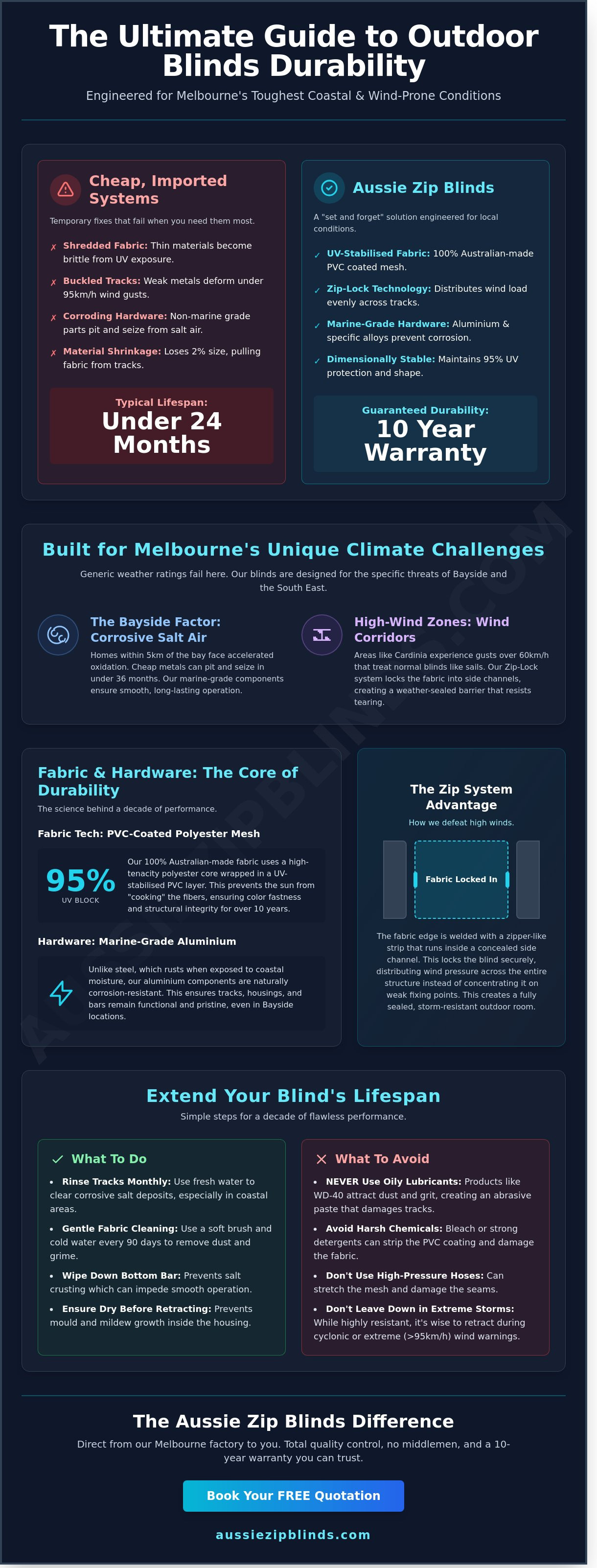
Homes within 5km of Port Phillip Bay face a constant invisible threat. Salt air accelerates the oxidation of non-marine grade metals in blind tracks and housings. Cheap hardware pits and seizes within 36 months in coastal environments. Aussie Zip Blinds uses specific alloys designed for coastal environments to prevent this corrosion and maintain smooth operation. To protect your investment near the coast, follow these maintenance steps:
- Rinse side tracks with fresh water every 4 weeks to clear salt deposits.
- Wipe down the bottom bar with a soft cloth to prevent salt crusting.
- Ensure the blind is fully dry before leaving it retracted for long periods.
Wind Corridors in Cardinia and Melbourne East
In high-wind zones like Cardinia and parts of Melbourne’s East, traditional blinds act like sails. They catch the wind, pull at the corners, and eventually tear away from their fixings. The "Zip" system solves this by locking the fabric into a side channel. This distributes pressure across the entire track rather than concentrating it on the corners. It's the most effective way to improve outdoor blinds durability in exposed areas.
Professional tensioning during installation is the final piece of the puzzle. If the fabric isn't perfectly taut, it vibrates during 60km/h+ gusts. This vibration causes material fatigue and can lead to premature failure of the motor or crank handle. Our installers ensure every blind is calibrated for the specific wind load of your property. Get the Best Product and the Best Service by choosing a system built for Melbourne’s toughest wind corridors. Book your FREE Quotation today to see the difference local manufacturing makes.
Materials That Last: Comparing Fabric and Hardware Quality
To achieve maximum outdoor blinds durability, you have to look past the aesthetics. In Melbourne's South East and Bayside suburbs, your blinds face a constant battle against high ozone levels and salt-laden air. We use PVC-coated polyester mesh because of its chemical stability. This material features a high-tenacity polyester core for structural strength, wrapped in a UV-stabilised PVC layer that prevents the sun from "cooking" the fibers from the inside out.
Fabric Tech: Fighting UV Fading and Tearing
High-quality mesh is designed to maintain 95% UV protection for over 10 years. Cheap, non-Australian fabrics often lack the necessary stabilisers for our local climate. These inferior products suffer from "shrinkage," where the material loses 2% of its size within 24 months. This small change is enough to pull the fabric out of the tracks and ruin the zip alignment. To preserve the protective coating, follow a simple cleaning protocol: use a soft brush and cold water every 90 days to remove corrosive salt and dust that can degrade the mesh over time.
Hardware choice is the next pillar of longevity. For Bayside homes, aluminium components are the only logical choice. Unlike steel, aluminium doesn't rust when exposed to moisture and salt. According to Melbourne's climate data, wind gusts in the South East often reach speeds that would buckle standard retail blinds. Don't settle for "water-resistant" labels that only handle light mist. True all-weather durability requires marine-grade hardware and reinforced tracks that can withstand heavy rain and 80km/h winds without vibrating or failing.
The Zip Mechanism: Why Engineering Matters
The side-fastening zip is what differentiates a professional installation from a basic screen. This system locks the fabric into the side tracks, preventing the "blow-out" effect common in older track-guided designs. The most common failure point in the industry is the weld. This is the bond where the zip meets the fabric. If the heat-welding process isn't precise, the zip will peel away under tension. Aussie Zip Blinds uses a reinforced welding technique that creates a permanent, structural bond. This ensures the blind stays taut and functional for its entire lifespan. If you're ready to upgrade your outdoor space, book a free appointment to see these durable materials in action.
Weather Resistance FAQ: Can They Really Stay Down in a Storm?
The most common question we hear is whether you need to retract your blinds the moment the wind picks up. For traditional cafe blinds or loose crank-operated styles, the answer is usually yes. Once gusts reach 30km/h, those older styles start to flap and strain against their fixings. Our zip-style blinds are different. They create a sealed room effect that significantly boosts outdoor blinds durability. You don't have to run outside at the first sign of a breeze or a spring shower.
Zip blinds are engineered to stay locked in their tracks. While a standard outdoor blind might fail or tear at the mounting points, a zip system distributes the pressure evenly along the entire side channel. This allows them to withstand much higher wind loads than a basic fabric screen. However, every product has a break point. We recommend retracting your blinds if the Bureau of Meteorology (BOM) issues a severe weather warning for gusts exceeding 80km/h. It's about protecting your investment during extreme Victorian weather events.
Rain Protection: Keeping Your Patio Dry
Rain doesn't just fall straight down; it often blows sideways. Traditional blinds allow water to wrap around the edges of the fabric and soak your outdoor furniture. Zip-style systems use a side-channel seal that creates a physical barrier. This stops water penetration completely. We also install heavy-duty bottom-rail seals. These rubber gaskets compress against your floor to block water from flowing underneath during a downpour. For the best results, ensure your alfresco area has a standard 1:100 drainage fall. The blind keeps the rain out, and the floor slope carries any surface moisture away safely.
Wind Ratings and Safety
Wind ratings for Melbourne homes vary by location. A high wind resistance rating means the blind has been tested to stay secure in its tracks during sustained pressure. In the South Eastern suburbs, a rating that handles 50km/h gusts is often sufficient for daily use. On the Mornington Peninsula, the coastal exposure is much higher. We use higher tension settings for Peninsula installs to prevent the fabric from "bellowing" in the wind. Modern motorized systems also include safety sensors. If the motor detects too much resistance from a sudden gust while moving, it stops automatically. This prevents fabric stretching and motor burnout, ensuring your blinds last for years.
- Zip Blinds: Rated for high wind resistance and sealed against rain.
- Traditional Blinds: Best for sun shade, but should be retracted in winds over 30km/h.
- Motorized Safety: Built-in sensors prevent damage during operation.
Extending the Lifespan: Maintenance Tips for South East Homeowners
Investing in high-quality shade shouldn't be a one-time event that you forget about. If you want to maximize your outdoor blinds durability, a little effort goes a long way. Spending just 10 minutes cleaning your blinds every 3 months can add 5 years to your product life. It keeps the moving components fluid and ensures the fabric looks as good as the day we installed it. Our 10-year warranty covers the major structural points, but your day-to-day care protects your daily comfort.
Cleaning the Mesh Without Damaging the Coating
Follow these steps for a safe and effective clean. First, use a soft-bristled brush to sweep away loose dust and cobwebs. Second, use a bucket of lukewarm water mixed with a small amount of mild dish soap. Avoid harsh chemical cleaners or bleach, as these destroy the fabric's integrity. Wipe the mesh in a gentle circular motion. Third, rinse the soap away with a low-pressure garden hose. Don't ever use a high-pressure hose on your blinds. The intense pressure can strip the protective UV coating and weaken the fabric fibers, leading to sagging. If you spot bird droppings or tree sap, clean them off immediately. These substances are acidic and will "bake" into the mesh under the Melbourne sun, causing permanent staining. Always let the fabric dry completely before retracting the blind. Rolling up a soaking wet blind is a recipe for mould and mildew growth.
Track and Motor Care
The secret to a smooth glide is keeping the side tracks clear of debris. Check the tracks for spider webs, grit, or dried leaves that might cause the motor to strain. Never use WD-40 or any oil-based lubricants on your blind tracks. These products are magnets for dust and will eventually create a thick, sticky sludge that jams the mechanism. Instead, use a light application of dry silicone spray to keep the zip gliding effortlessly. This prevents the motor from overheating and extends the life of the internal gears. Maintaining outdoor blinds durability in coastal environments requires this specific attention to friction points.
For Bayside homes in areas like Chelsea, Brighton, or Sandringham, salt air is a constant factor. Every season, wipe down the headbox and tracks with fresh water to remove salt crust. This prevents corrosion on metal parts and keeps the motor running cool. If you hear grinding noises, notice the blind moving unevenly, or see the fabric bunching at one side, it's time to call for professional servicing in the Melbourne South East area. Addressing these small issues early prevents costly motor replacements later.
Get the most out of your outdoor space with the best outdoor blinds in Melbourne.
The Aussie Zip Blinds Difference: Direct from the Manufacturer
Buying direct from the manufacturer changes the game for homeowners. It means we control the entire durability chain from the first cut of fabric to the final installation. We don't use middle-men or third-party suppliers who might compromise on quality to pad their margins. This total control is why we provide a 10-Year Warranty. It’s a promise we stand behind because we know our components are built to last. This warranty covers the essential structural elements of your blinds, giving you peace of mind that your investment is protected against the elements for the long haul.
Choosing Aussie Zip Blinds means you're supporting local Melbourne jobs while securing the Best Product at the Best Price. We've sold over 150,000 blinds across Victoria. This massive volume has given us unique insights into the specific needs of Bayside and Mornington Peninsula homes. We understand how the salt air and coastal winds affect outdoor blinds durability, and we've refined our designs to meet those challenges head-on. Our local knowledge ensures that the hardware we use won't seize up or corrode in the harsh bayside environment.
100% Australian Made: Why It Wins on Durability
Many homeowners fall into the "import trap" by choosing cheaper products designed for overseas climates. These blinds often fail within two years because they can't handle the intense Australian UV index. Our products are 100% Australian Made. Having our factory located in Melbourne means warranty support is fast and efficient. You won't be left waiting for months for parts to arrive on a shipping container. We also offer complete customisation. Whether you have a modern build in Cardinia Shire or a classic Bayside home, we ensure a millimetre-perfect fit that eliminates gaps and improves outdoor blinds durability by reducing unnecessary fabric strain.
Your FREE Quotation and Expert Assessment
A free measure and quote from our team is more than just a price tag. It's a technical consultation. We perform a site-specific assessment of your local wind load and sun exposure. A balcony in Brighton faces different environmental stress than a patio in Berwick. We help you select the exact fabric weight and weave to ensure your installation thrives in its specific environment. We take the guesswork out of the process so you get a result that looks great and performs for years. Don't settle for "off-the-shelf" solutions that aren't built for your suburb's specific weather patterns.
Secure Your Bayside Lifestyle with Blinds Built to Last
Choosing the right protection for your patio means understanding that Melbourne weather doesn't compromise. We've covered why high-quality fabrics and marine-grade hardware are the foundation of outdoor blinds durability, particularly for homes in the South East. You don't want to risk your investment on cheap imports that rattle in the wind or tear during a summer storm. By prioritizing local manufacturing and professional installation, you ensure your outdoor space remains functional and private for years to come.
Aussie Zip Blinds makes this transition easy by dealing straight from the manufacturer to you. We've already sold over 150,000+ blinds to happy Melbourne homeowners, proving our systems stand the test of time. Because our products are 100% Australian made and owned, they're designed specifically for our unique climate. We stand behind every job with a 10-year warranty, giving you total peace of mind. It's the best product at the best price, delivered with no-nonsense service you can trust.
Get Your FREE Quotation on Durable, Australian-Made Blinds Now
Take control of your outdoor comfort today and start enjoying your backyard in any season.
Frequently Asked Questions
How long do outdoor blinds typically last in Melbourne?
High-quality outdoor blinds typically last between 10 and 15 years in Melbourne's variable climate. We manufacture our products locally to ensure they handle the 40-degree summer heat and freezing winter winds. To get the best outdoor blinds durability, you should choose 100% Australian made materials. Our customers in the South Eastern suburbs consistently report their blinds looking new after a full decade of use.
Can outdoor blinds withstand heavy rain and 60km/h winds?
Yes, our zip-style blinds are specifically engineered to withstand winds up to 60km/h and heavy rain. The side channels lock the fabric tight, which prevents the flapping or "sail effect" found in cheaper products. You don't have to worry about the blind blowing out of its tracks during a typical Bayside storm. For safety, we recommend retracting them if wind gusts are forecast to exceed 80km/h.
Do outdoor blinds fade in the Australian sun?
Modern mesh fabrics include UV inhibitors that prevent visible fading for at least 10 years. We use high-grade PVC-coated polyester that blocks up to 99% of UV rays, protecting both the blind and your outdoor furniture. This material is tested to withstand over 3,000 hours of direct sun exposure without becoming brittle. Our blinds are built for the harsh Australian sun so they won't bleach or perish quickly.
Is it worth getting motorised blinds for better durability?
Motorised blinds often have a longer lifespan because they operate with perfectly consistent tension and speed. Manual operation can lead to uneven pulling or accidental jerking, which puts unnecessary strain on the fabric and tracks. We can install sensors that automatically retract your blinds when wind speeds hit 50km/h. This smart technology protects your investment from sudden weather changes when you aren't home.
What is the best way to clean outdoor blinds in coastal areas like Bayside?
You should clean your blinds every 3 months to remove salt spray and grit if you live in Bayside. Use a soft brush and cold water mixed with a mild, pH-neutral soap to gently wipe the surface. Avoid using harsh chemicals or high-pressure hoses because they can strip the protective UV coating. Rinsing the side tracks regularly ensures the mechanism stays smooth and prevents salt from corroding the internal components.
Does a 10-year warranty cover wind damage?
A standard 10-year warranty covers manufacturing defects and fabric degradation rather than accidental storm damage. Our warranty protects you against fading, rotting, or hardware failure under normal operating conditions. For specific wind damage, you should check your home insurance policy as most Australian insurers cover permanent external fixtures. We focus on providing the outdoor blinds durability you need to survive 95% of Melbourne's weather events.
Are zip-style blinds more durable than cafe blinds?
Zip-style blinds are significantly more durable than cafe blinds because they are secured inside a channel on both sides. Traditional cafe blinds use straps and buckles, which allow the fabric to flap and tear when winds reach just 30km/h. A zip-track system eliminates these gaps and reduces the mechanical stress on the fabric. This design keeps your outdoor area dry and ensures the blinds remain stable all year round.
How much maintenance do outdoor blinds really need?
You only need to spend about 20 minutes every 6 months on basic maintenance to keep your blinds in top shape. This involves wiping down the pelmets and applying a dry silicone lubricant to the side tracks. Keeping the tracks clear of debris prevents the motor or manual crank from straining during operation. It's a simple, no-nonsense process that helps your blinds function perfectly for 15 years or more.
Disclaimer
All articles are generated and written from various sources and try to reflect all information from experience and knowledge, as well as information collected from the internet.